
India’s July Flash PMI Slows to 54.3 as Inflation Pressures Intensify
India’s private sector growth slowed further in July, while inflationary pressures intensified, according to the HSBC Flash India PMI released using data collected between July 8 and July 21, 2026. The HSBC Flash India Composite PMI Output Index fell to 54.3 from June’s final reading of 57.1, marking the slowest expansion in private sector activity […]
India’s private sector growth slowed further in July, while inflationary pressures intensified, according to the HSBC Flash India PMI released using data collected between July 8 and July 21, 2026. The HSBC Flash India Composite PMI Output Index fell to 54.3 from June’s final reading of 57.1, marking the slowest expansion in private sector activity since March 2022.
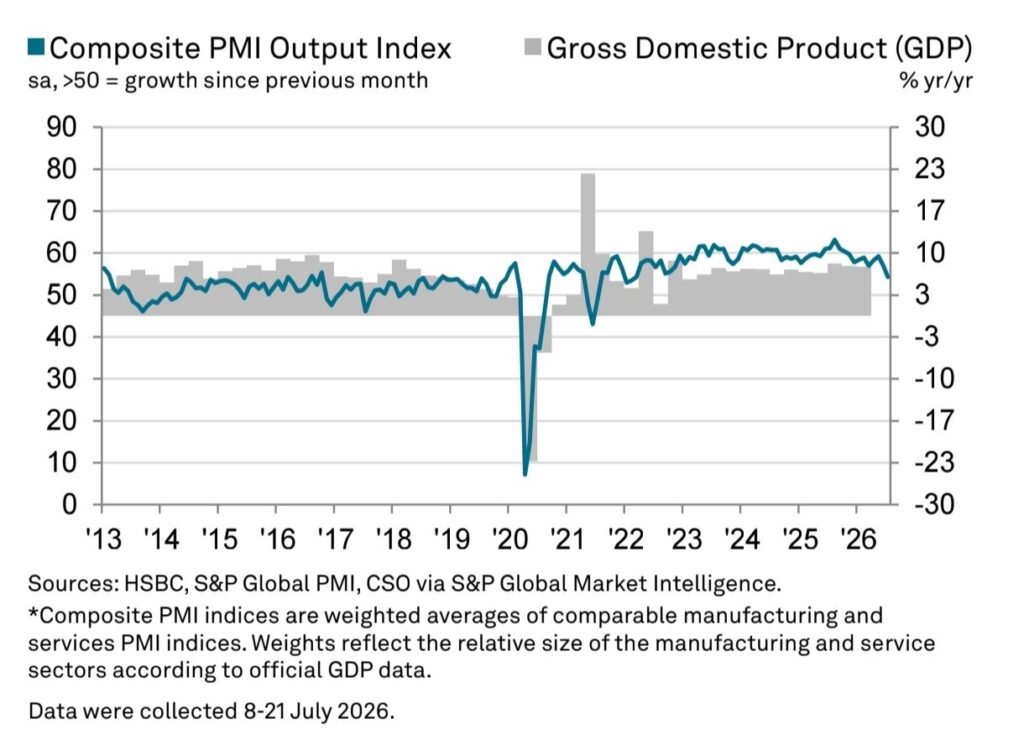
The HSBC Flash India Services PMI Business Activity Index declined to 53.1 in July from 57.4 in June, indicating the weakest services growth in 53 months. In contrast, the HSBC Flash India Manufacturing PMI Output Index rose to 57.0 from 56.3, although the headline Manufacturing PMI eased slightly to 53.9 from 54.2, pointing to a below-trend improvement in factory conditions.
The survey showed the weakest growth in private sector sales and output since early 2022, even as new export orders increased and companies continued hiring. Growth was affected by challenging market conditions, competitive pressures, order cancellations, reduced client enquiries, and shortages of key raw materials. Manufacturing firms outperformed services in export growth, with international sales recording the strongest increase since March.
Price pressures strengthened during July, with faster increases in both input costs and output charges across manufacturing and services. Firms cited higher fuel, labour, material and transportation costs, while the overall rise in output prices was the fastest since April. Manufacturers also increased purchases and input inventories, while stocks of finished goods recovered after declining in June.
Private sector employment extended its growth streak to seven months, although job creation remained modest and was stronger in services than manufacturing. Outstanding business volumes fell at the composite level for the first time in three months due to backlog clearances in services, while unfinished work continued to rise among manufacturers. Business confidence slipped to a six-month low, with optimism improving in manufacturing but weakening in services.
Commenting on the survey, HSBC Chief India Economist Pranjul Bhandari said renewed tensions in the Middle East prompted firms to build buffers against supply-side uncertainties. She said inventories of finished goods and inputs increased alongside higher purchasing volumes, while price pressures strengthened as firms sought to protect margins through faster output price increases.
Related News
US Imposes Section 301 Tariffs on India, China, EU and 57 Other Economies

India Records 21% Rainfall Deficit as Monsoon Lags, Govt Rules Out Crop Impact
India’s Wind Power Capacity Hits 57,443 MW, Generation Surges in FY26

India’s Primary Energy Supply Rises to 39,055 PJ in FY25: MoSPI
Trump Unveils New US Tariff Plan for Generic Drug Imports from 2026